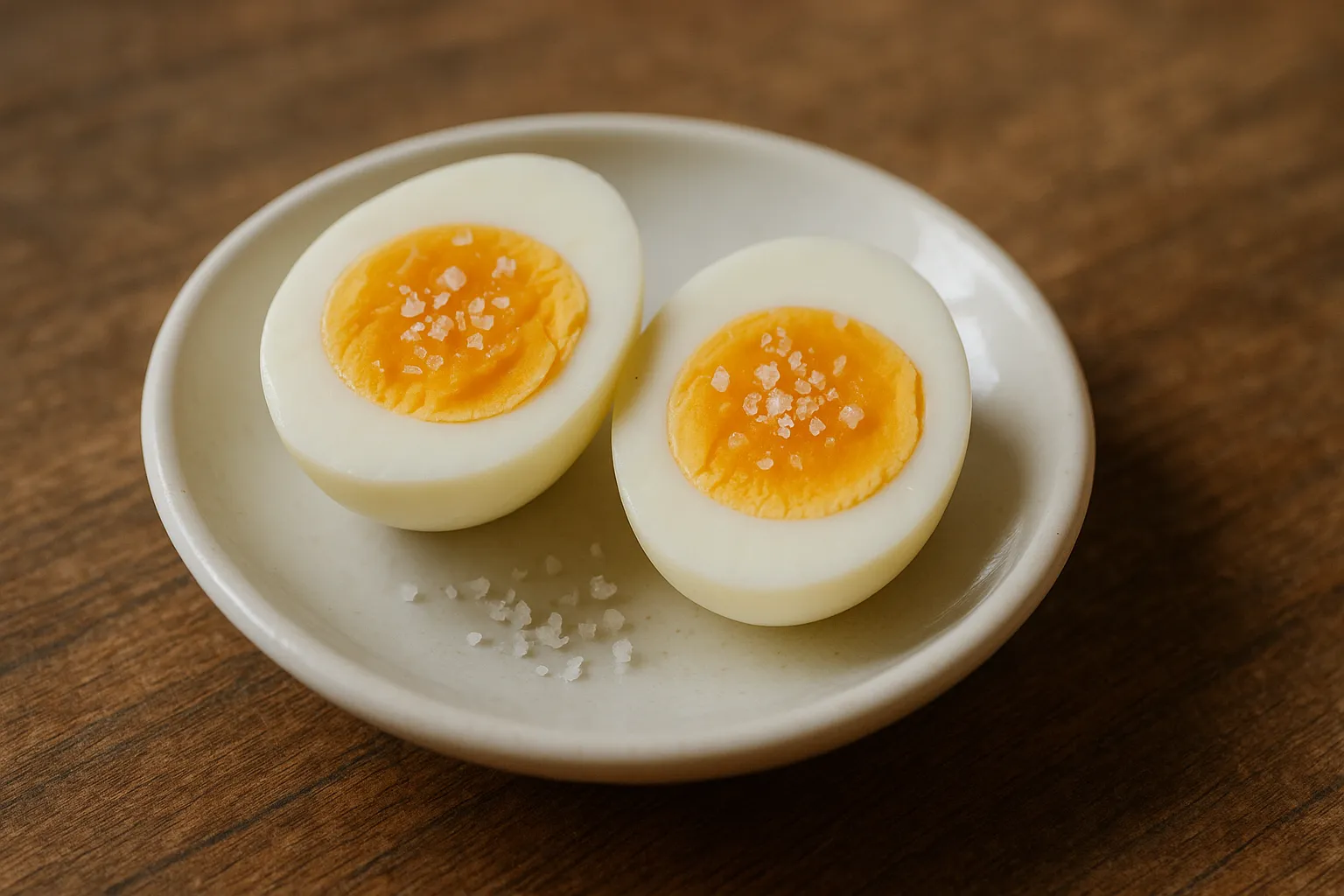
Perfect Boiled Eggs with Salt
A simple, foolproof method to cook eggs to soft, medium (creamy), or hard doneness. Clear timings, an ice bath and peeling tips ensure consistent results at home.
- Total time17 min
- Prep5 min
- Cook12 min
- Yield4 servings
- DifficultyEasy
Ingredients
Instructions
- Place the water in a medium saucepan and bring to a boil over high heat until large bubbles form.
- Meanwhile, prepare a bowl of cold water with the ice for the ice bath; set aside.
- When the water is boiling, lower the heat to maintain a gentle simmer and add the salt. Using a spoon, gently lower the eggs into the pan.
- Start timing from the moment all eggs are submerged: 4–5 minutes for soft-boiled (runny), 7–8 minutes for creamy yolk (medium), 10–12 minutes for fully set yolk (hard).
- When the time is up, immediately remove the eggs with a slotted spoon and plunge them into the ice bath for at least 5 minutes to stop the cooking.
- To peel easily, crack the shell by tapping the egg gently on the counter and roll it with your hand; begin peeling from the wider end (where the air pocket is).
- If needed, peel under cold running water to help loosen the membrane and rinse away small shell pieces.
Tips
- Eggs a few days old peel more easily than very fresh eggs.
- A small pinhole in the wide end made with a needle can help prevent cracks during cooking.
- Use the ice bath right away to stop cooking and lock in the exact yolk texture.
Variations
- Sprinkle coarse sea salt and black pepper on a halved medium egg to serve on toast.
- For poached eggs, crack the egg into simmering water with a splash of vinegar instead of boiling.
- Make a quick pickle: place peeled hard-boiled eggs in a jar with seasoned vinegar and let sit 24 hours.
FAQ
How can I tell the doneness without cracking the egg?
Spin the egg on the counter: a soft-yolk egg wobbles more; a hard-boiled egg spins stable and faster.
Should I use refrigerated eggs or room temperature?
Either works; room-temperature eggs reduce the chance of cracking and cook more evenly.
Why add salt to the water?
Salt helps reduce cracking and, if an egg does crack, it slightly firms the white so it’s less likely to leak.
Want a recipe for what you have?
Download the free app and turn your ingredients into recipes.